Majolika Manufaktur Karlsruhe: the final auction of a 120-year-old institution
When I first walked through the halls of Majolika Manufaktur Karlsruhe in December 2024, thousands of ceramic works stood there – unique pieces, workshop items, never-before-seen designs. Over 120 years of manufactory history, and an open question: What will become of it?
Three months later, every single piece was sold. This report describes how this was achieved – the process, the figures, the decisions. And what insights stakeholders facing a similar task can gain. Project management was handled by me, Oskar Kampik – art consultant for collection and museum dissolutions, Berlin.
The project in four figures
The initial situation: 10,000 objects and a fixed deadline
Two things made this project challenging. First, the scope: the collection ranged from signed unique pieces to depot consignments, plus workshop samples and works that had never been publicly displayed. Second, time – the premises had to be handed over by a fixed date. A schedule that could not be postponed.
In addition, there was something that is difficult to quantify: a manufactory like Majolika belongs to a city. Employees, collectors, neighbors – many people had a personal connection to this place. A collection that quietly disappears into containers and depots would have damaged this history. The task was therefore never purely logistical. It was also a question of attitude.
Nevertheless, at the very beginning, there was a sober question: What is actually there? Before the first complete assessment, the collection was a black box – and no one could seriously say what proceeds were realistic.
The process: three months from initial assessment to gavel fall
The process followed the same systematic approach as a museum dissolution – but under high time pressure.
Assessment & Inventory
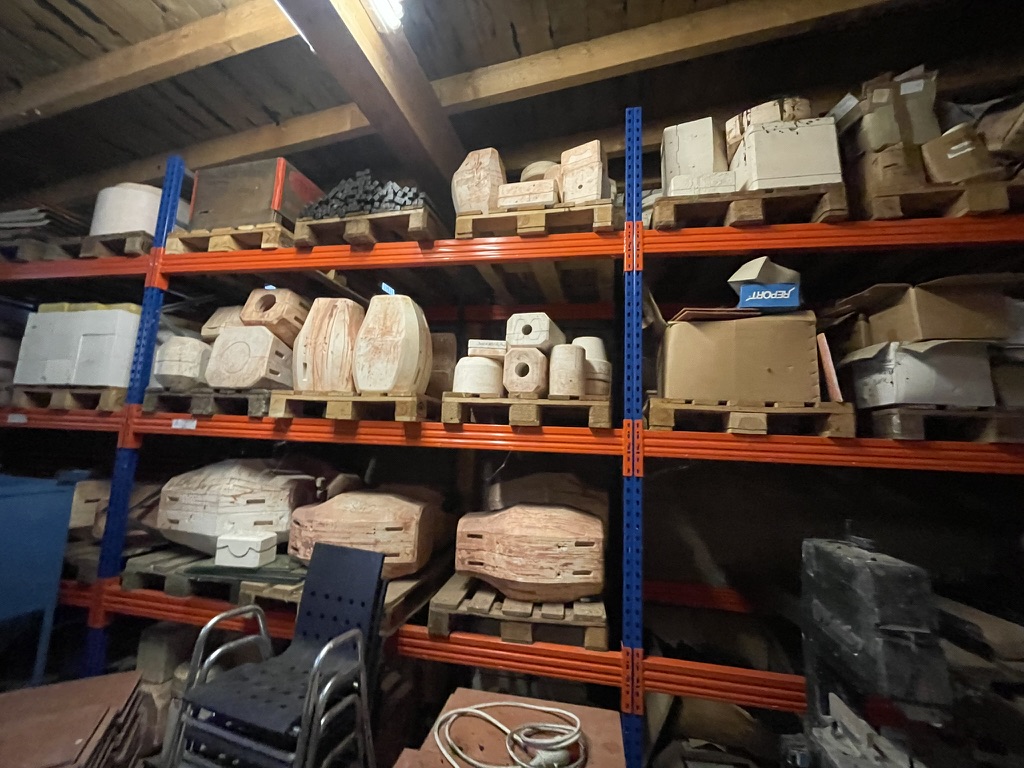
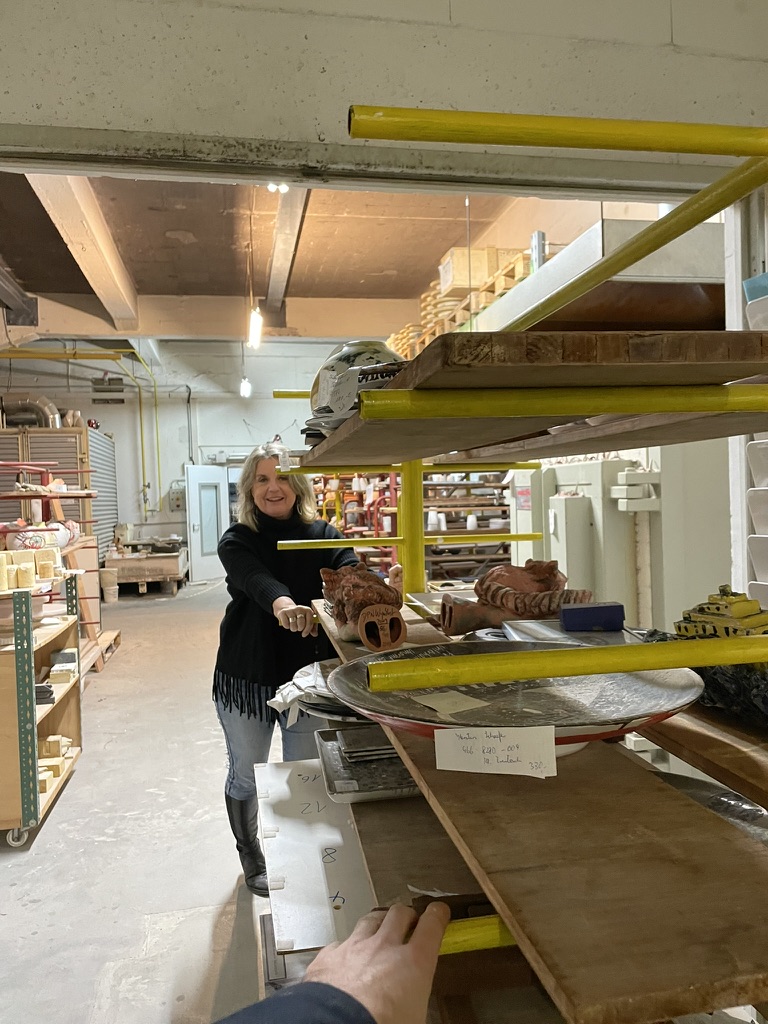
Complete on-site inventory of the collection – from top pieces to series items. Only then could planning begin: scope, effort, realistic expectations.
Cataloging & Photography
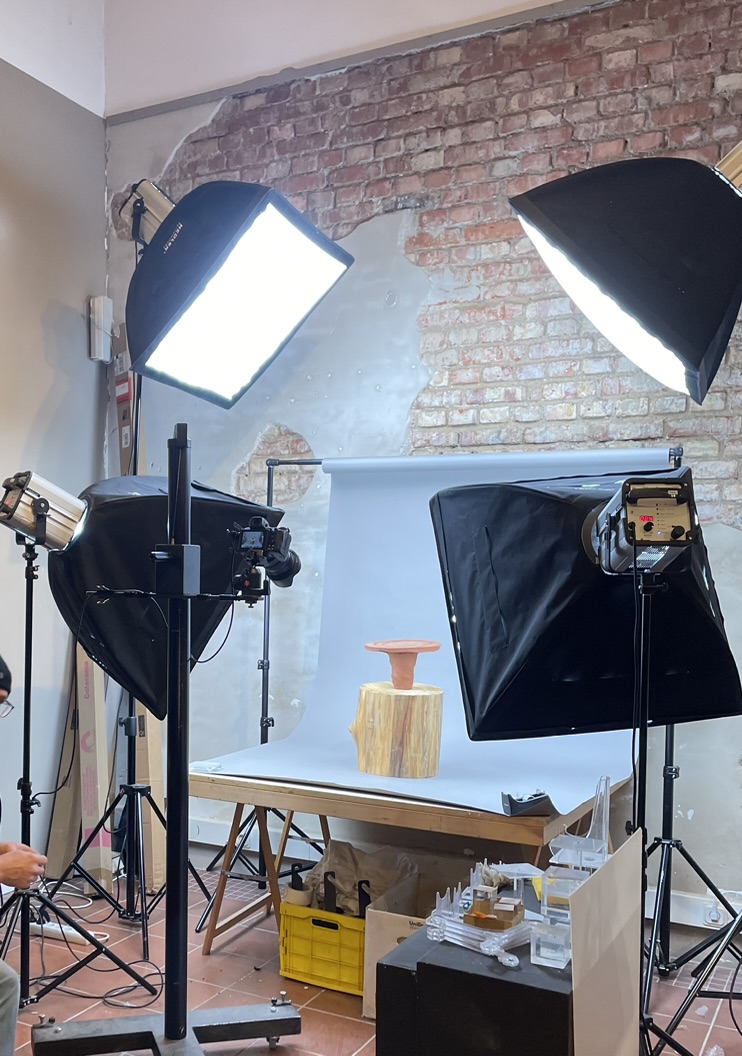
Over three months, each object was described, assigned, and photographed. This work is the most unspectacular yet crucial part: without a reliable catalog, there are no bidders outside the region.
Lot Formation & Pricing Strategy
From over 10,000 objects, 1,500 lots were created – individual pieces where their value justified it, consignments where quantity would otherwise have become a problem. All lots started uniformly at 100 Euros.
Catalog, Press & TV
8,000 printed auction catalogs, plus intensive coverage by television and press. Public attention here was not a risk, but the most important lever for reach.
Auction & Processing
Three auction days, followed by invoicing, shipping, and handover of documentation. Only when this is completed is such a project truly finished.
Every object started at a democratic opening price of 100 Euros – ensuring that everyone truly had the opportunity to acquire a piece of Majolika history.
This decision was the most controversial of the project and, in retrospect, the right one. A low, uniform starting price lowers the barrier to entry, brings people into the room who would otherwise not bid at an auction – and lets the market determine the price, instead of dictating it. For strong lots, the hammer price went far beyond the starting price. For weaker ones, it ensured they found a buyer at all.
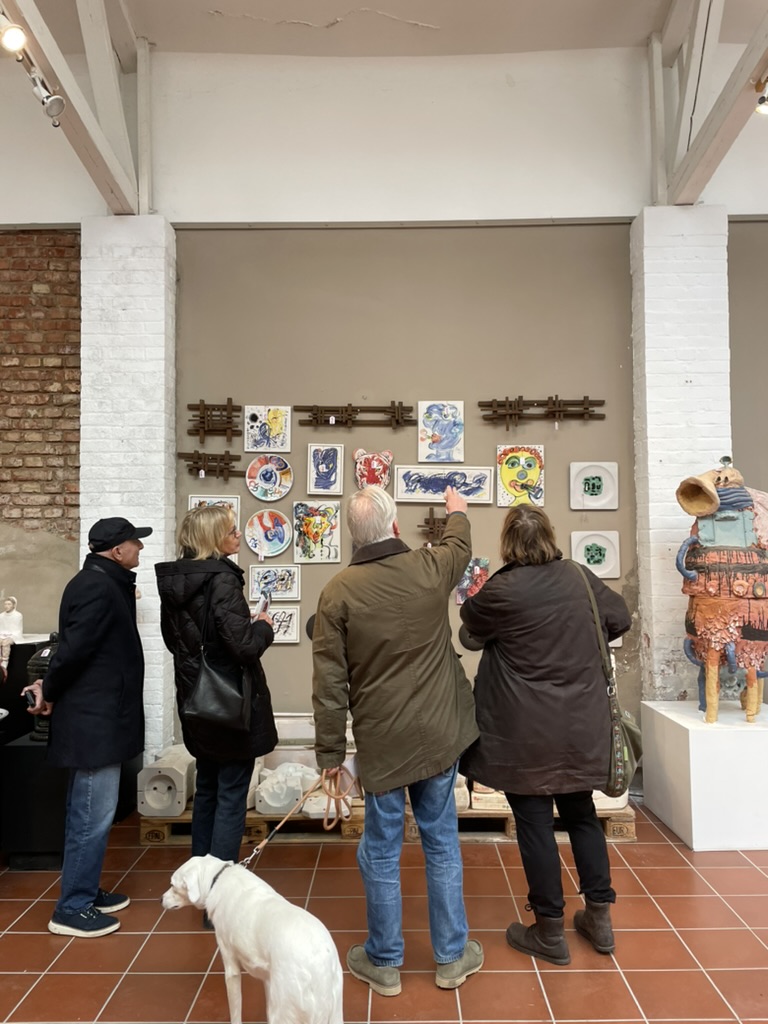
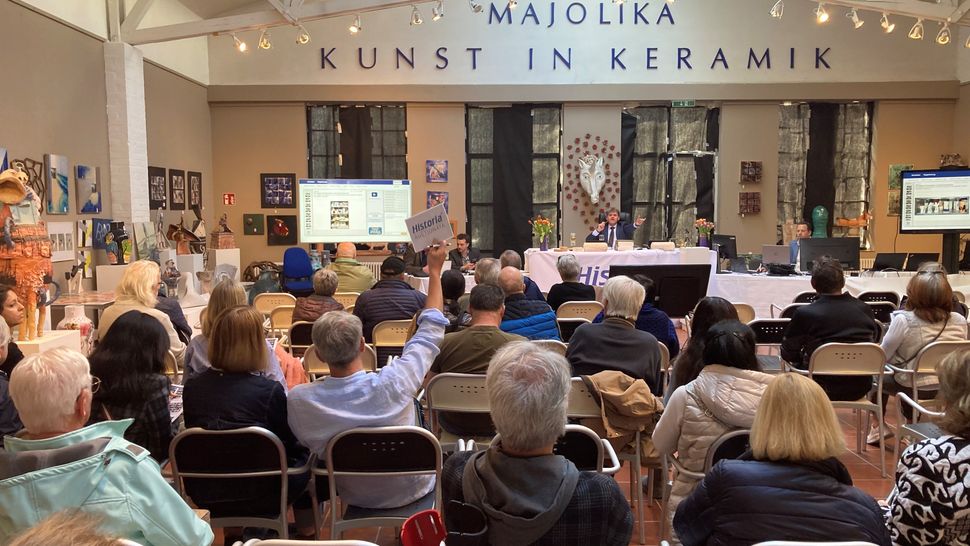
Three auction days – and 1,500 new homes
Over three intensive days, auctioneer Michael Lehrberger auctioned 1,500 lots with over 10,000 objects. Every single lot found a buyer. The hammer price was around 700,000 Euros, with the buyer’s premium totaling just under one million.
What these figures don’t reflect is the atmosphere. Over 1,500 visitors came to the preview alone – some with tears in their eyes. Bids came from Karlsruhe, the rest of Germany, Luxembourg, Australia, and the USA, in the room, in writing, by phone, and online. People who had worked in the manufactory for decades stood next to collectors holding a Majolika piece for the first time.
On the last day, the gavel didn’t fall until half past midnight. This was made possible by a team that persevered for three days – in addition to Michael Lehrberger at the podium, especially Yves Siebers, whose routine held the process together.
What stakeholders can take away from this project
The Majolika case is exceptional in its scale, but its logic is transferable. Four points that apply to almost any collection dissolution:
Speed is possible. Three months from initial assessment to auction sounds ambitious, but it is feasible if assessment, cataloging, and marketing run in parallel instead of sequentially. For stakeholders with rental agreements, fiscal years, or deadlines, this is often the decisive question.
Completeness beats cherry-picking. If you only sell the top pieces, you’re left with the rest – and the rest is usually the volume problem. The 100% sales rate was not luck, but the result of considering the entire collection from the outset.
Publicity is a lever, not a risk. A dissolution that generates attention anyway should be actively managed rather than waited out. Press and TV coverage brought more bidders here than any advertisement – and gave the stakeholder a narrative they could shape themselves.
Documentation is the basis for accountability. Committees, boards, and supervisory bodies must be able to understand what happened to which object and why. A clean catalog and transparent revenue accounting are ultimately just as important as the result.
More on this approach for institutional collections: Museum Dissolution & Deaccession · Collections & Estates.
Team and Responsibility
As project manager, I was responsible for the overall project – but the result was only possible through close collaboration with Martina Kistner-Bayne, the Gröner Family Office, and an auction team that pulled together for three months. A detailed report on the auction can be found at the conducting auction house: A Worthy Conclusion – The Great Majolika Auction (Historia Auktionen).
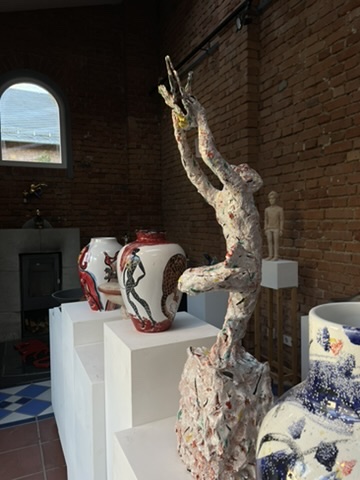
What Remains
The Majolika has not disappeared. Today it stands in living rooms, in display cases, in collections – with people who knew what they were taking home. That’s exactly my benchmark: not that a collection was cleared out, but that it was passed on.
TV Report & Press Reviews
Baden TV accompanied the auction on site – the report shows the manufactory, the collection, and the preview.
Frequently Asked Questions about the Project
How long does a dissolution of this magnitude take?
At Majolika Manufaktur Karlsruhe, approximately three months passed between the first assessment in December 2024 and the final gavel fall. This is ambitious but not an isolated case: the crucial factor is that inventory, cataloging, photography, and marketing run in parallel. For smaller collections, six to ten weeks are realistic.
Why a uniform starting price of 100 Euros?
A low entry price brings people into the room who would otherwise not bid, and leaves price formation to the market. Strong lots will exceed the starting price anyway; weaker ones will find a buyer at all. This is precisely what leads to a 100 percent sales rate.
What happens to objects that no one bids on?
In Karlsruhe, nothing was left over – every lot was sold. Generally, for remaining items, there are post-sales, lot consolidation, or mediation to institutions and collections. It is important to arrange this before the auction, not afterwards.
Can this approach be applied to smaller collections?
Yes. The process – assessment, valuation, realization concept, documented deaccessioning, realization – is the same, whether it involves 500 or 10,000 objects. The effort and marketing channel differ: not every collection warrants its own auction; some are better handled through direct sales or mediation.
Is an inquiry confidential if nothing has been decided yet?
Yes. Most conversations begin long before a decision has been made or made public – with a confidentiality agreement if desired. The timing of communication is always decided by the stakeholder.
Are you facing a similar task?
In an initial meeting, we will clarify, without obligation and in confidence, how your holdings can be realised in an orderly, transparent and dignified manner.