When a museum closes, an institution comes to an end – but responsibility for its holdings does not.
The closure of a museum, a manufactory or an institutional collection is different from dissolving a private collection: public bodies, media scrutiny, ethical guidelines, transparency obligations – and often tens of thousands of objects. These are precisely the projects I take on: end-to-end, transparently and in the shortest possible time.
Collection review & concept
Recording and valuing the entire museum holding – from the highlight piece to the storage lot – and a realisation concept that stands up to the governing body and the public.
Deaccessioning & documentation
Orderly deaccessioning with proper documentation and cataloguing – traceable for boards, governing bodies and the press.
Final auction & realisation
Public auction, direct sale or placement with collections and institutions – the right route for each object, so holdings do not disappear into storage.
Press & communications
A museum closure is a public event. I manage TV, print and the specialist press so that the farewell becomes a dignified conclusion – and maximum reach for the auction is achieved.
120 years of manufactory history, concluded with dignity – and sold out to the very last piece.
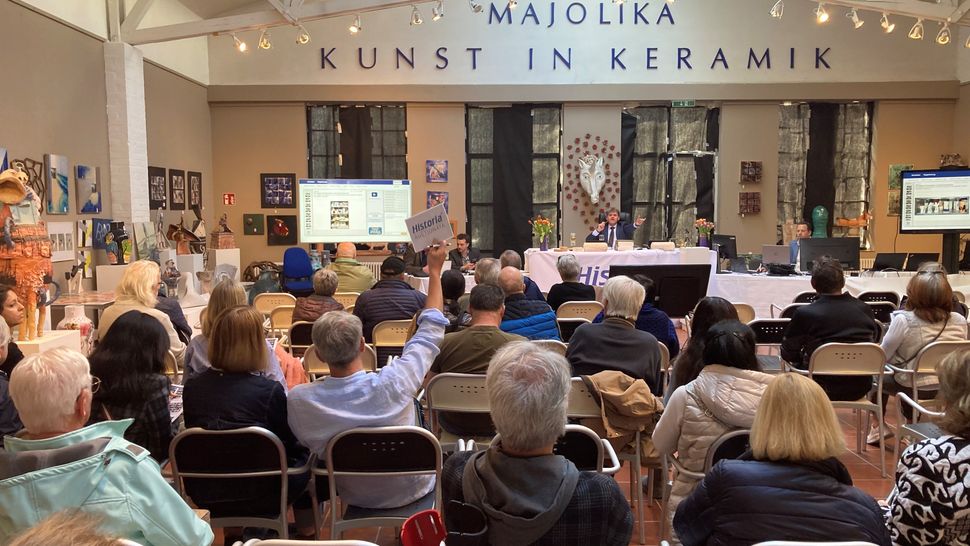
When the State Majolika Manufactory Karlsruhe closed, I managed the dissolution from the initial vision to the final fall of the hammer: over 10,000 objects cataloged in three months, 8,000 printed catalogs, intensive press and TV coverage, three auction days – the final hammer fell only after midnight.
This conclusion was dignified above all because it was open to everyone: every object started at a democratic starting price of 10 euros. This allowed every citizen of Karlsruhe – and everyone attached to this manufactory – to take home a piece of Majolika history. Over 1,500 people attended the preview alone, some with tears in their eyes; bids came from Karlsruhe, all over Germany, and the entire world. Thus, a farewell became one last great celebration for the manufactory.
How a museum dissolution works
Every project is different – the path is always the same: orderly, documented, and traceable for all parties involved. From the initial review to the final auction, only a few months pass, depending on the scope.
Confidential Initial Consultation
Initial situation, goals of the sponsor, preliminary assessment of the holdings – strictly confidential, often long before a closure is decided or public.
Inventory Review & Valuation
Recording of the entire inventory from highlights to depot bundles, clarification of ownership, and a realistic valuation as a basis for decision-making by committees.
Realization Strategy & Resolution
The right path for every object group: auction, direct sale, or placement with museums and collections – prepared as a proposal for sponsors, boards, or municipal councils.
Deaccessioning, Catalog & Press
Documented removal according to ethical guidelines, cataloging and catalog production, as well as managed press and TV coverage for maximum reach.
Final Auction & Settlement
Execution of the auction or sales, transparent accounting of proceeds, and handover of the complete documentation to the sponsor.
Who I work for
Every sponsor has different constraints – budgetary, statutory, balance-sheet-related, or very personal. The realization must fit them all.
Municipalities & Public Bodies
Budgetary law, auditing, political public: Municipal holdings require a realization that stands up to every audit and every council meeting – transparently documented from the first object to the final accounting of proceeds.
Foundations & Associations
Foundation purpose, statutes, association resolution, non-profit status: When a sponsoring association ends its collecting activities, I accompany the dissolution in accordance with supervision and statutes – including the documents for general meetings and foundation supervision.
Companies & Manufactories
Corporate museums, factory archives, and museum holdings on the balance sheet: In the event of site closures, succession, or insolvency, I realize corporate holdings discreetly and without reputational risk – as with the State Majolika Manufactory Karlsruhe.
Private Museums & Heirs
A private museum or local history museum is often a life’s work. Here, besides the proceeds, one thing counts above all: that the collection finds a new home with time, respect, and dignity – and that the history of the house remains told.
Deaccessioning according to ethical guidelines
The professional world does not speak of “museum dissolution,” but of deaccessioning or de-collecting: the orderly, documented removal of objects from a museum inventory. The ethical guidelines of the International Council of Museums (ICOM Code of Ethics) and the recommendations of the German museum associations are authoritative.
I work consistently according to these standards: priority for significant pieces to remain in public collections, seamless documentation of every removal, and full transparency towards the sponsor, the professional world, and the public.
Clarification of ownership first, then realization
In almost every museum inventory, there are objects that do not belong to the house: loans, deposits, donations with conditions, pieces of unclear origin. Therefore, before any realization, there is a systematic clarification of ownership – loans are returned to their owners, conditions are checked, and doubtful cases are researched and documented.
In addition, depending on the sponsor, there are foundation, association, budgetary, and non-profit law requirements, particularly regarding the use of proceeds. All of this belongs in the strategy from the start – not just when the press asks.
Museum Dissolution – Questions & Answers
What happens to the exhibits when a museum closes?
After closure, the inventory is fully reviewed, documented, and valued. Thereafter, there is an orderly path for every object: acquisition by other museums and collections, return of loans to their owners, direct sale, or a public final auction. The crucial factor is that nothing disappears uncontrolled into depots or basements, but that every piece finds a new home traceably.
What is deaccessioning – and what does “de-collecting” mean?
Deaccessioning – also known as “de-collecting” or collection qualification – refers to the orderly, documented removal of objects from a museum inventory. It follows fixed professional and ethical rules: verification of ownership, resolution by the sponsor, transparent documentation, and a traceable use of proceeds. I accompany deaccessioning processes so that they stand up to scrutiny by sponsors, the professional world, and the public at all times.
Is a museum even allowed to sell its collection?
In principle, yes – under certain conditions. The ethical guidelines of the International Council of Museums (ICOM), the requirements of the sponsor, and, depending on the legal form, foundation, association, budgetary, and non-profit law are authoritative. As a rule, it requires a formal resolution by the sponsor, clarified ownership, and a transparent use of proceeds. Properly set up, realization is legitimate – and often the best solution for the inventory.
How long does a museum dissolution take?
Depending on the scope, a few months. At the State Majolika Manufactory Karlsruhe, three months passed between the first review and the final auction – for over 10,000 objects. A clear roadmap is crucial: review, valuation, committee coordination, cataloging, marketing, auction.
What does a museum dissolution cost?
This depends on the scope and condition of the inventory. In most projects, I work on a performance-related basis: remuneration is a percentage of the realization proceeds, so that there are usually no upfront costs for the sponsor. The initial consultation and a preliminary assessment are fundamentally non-binding.
What happens to loans, deposits, and unclear ownership?
Clarification of ownership precedes any realization. Loans and deposits do not belong to the museum and are returned to their owners; objects with unclear origins are researched and documented. Only what clearly belongs to the sponsor goes into realization – this protects all parties involved from legal and public risks.
Do you also handle partial dissolutions and depot dissolutions?
Yes. Complete closure is the rarer case – more common are depot dissolutions, the removal of individual collection areas, or the streamlining of holdings before a move or a realignment. The process is the same: review, valuation, documented deaccessioning, realization.
Will my inquiry remain confidential if the closure is not yet public?
Absolutely. Most conversations begin long before a decision has been made or is public. Until a jointly agreed communication is established, every inquiry remains strictly confidential – upon request, also with a non-disclosure agreement. You can find more about my way of working under Collections & Estates.
Is your institution facing closure or repositioning?
In an initial meeting, we will clarify, without obligation and in confidence, how your holdings can be realised in an orderly, transparent and dignified manner.